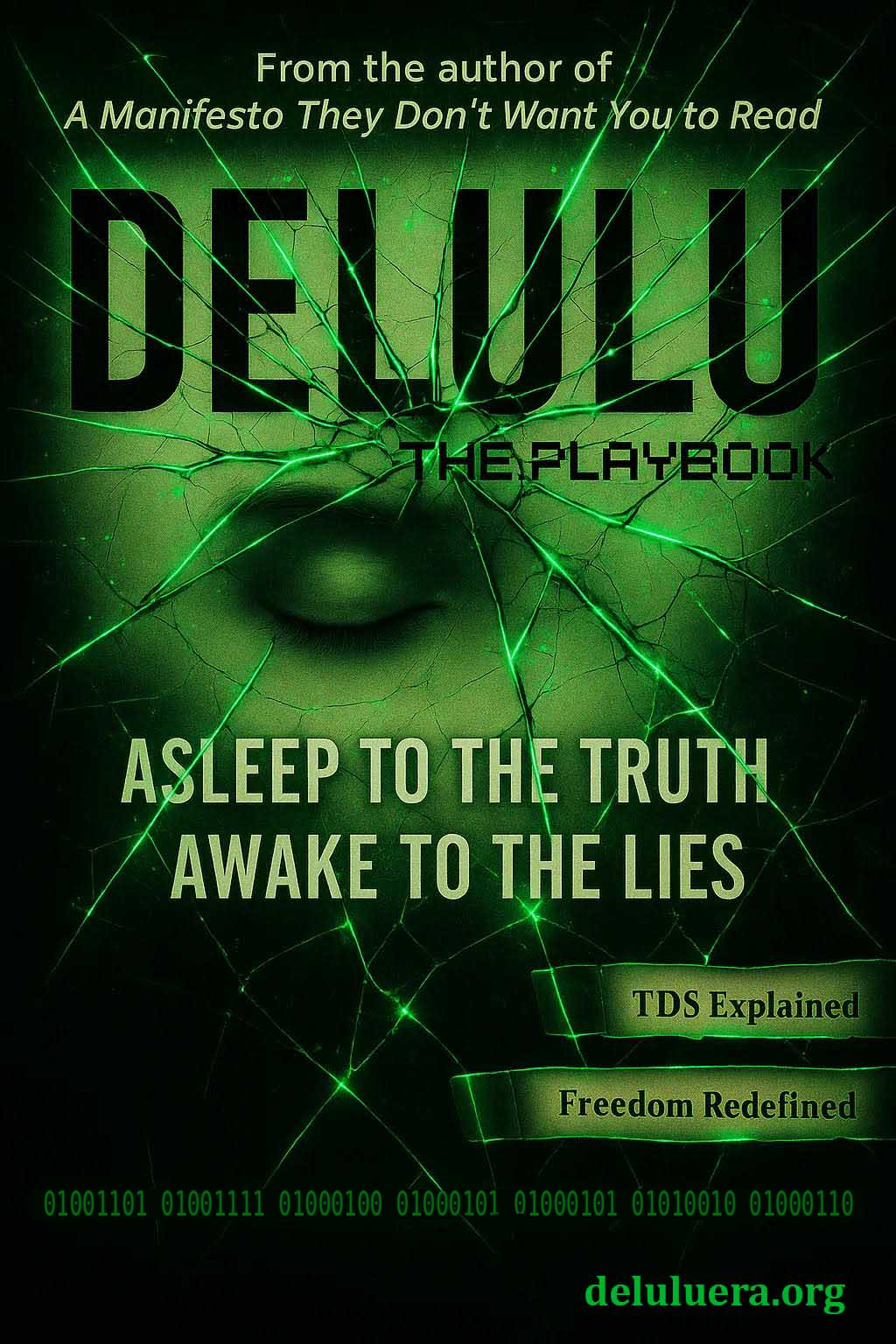
Delulu: The Playbook examins how modern power actually operates, not through force alone, but through narrative, incentive, and fear.
It explores how perception is shaped long before consent is given, how dissent is managed without overt censorship, and how financial, social, and technological pressures quietly replace open debate. This book does not argue one ideology versus another. It examines systems, how they are built, how they persist, and why most people never notice them operating at all.
This is not a call to outrage. It is an attempt to make the machinery visible.
Before release, early drafts of this book circulated among a small group of independent readers. What stood out was not agreement, but persistence. People kept talking about it. They revisited sections, challenged ideas, and connected them to patterns they were noticing in daily life. That kind of response mattered more than formal endorsement.
This book is for readers who question official narratives, who notice contradictions between what is said and what is rewarded, and who suspect that modern power rarely looks the way history books describe it.
It is for those willing to examine uncomfortable ideas without needing immediate reassurance or resolution.
This book is not for readers seeking validation, certainty, or ideological comfort. It does not offer slogans, heroes, or villains. It does not echo legacy media narratives designed to manage public perception and condition compliance rather than encourage independent thought.
If you are looking for reassurance that everything is functioning as intended, this book is not written for you.
Legacy media does not live here.
What kind of book is DELULU: The Playbook?
It is a nonfiction manifesto examining how modern systems shape belief, perception, and compliance. It is not a political endorsement or ideological instruction manual.
Is this book political?
The book discusses political systems, media behavior, and institutional power, but it does not argue for one ideology over another.
Who is this book for?
This book is for readers who question consensus narratives and are interested in how power operates beneath the surface.